Village in the Shade Review: A Dark Twist on the Farming Sim Formula
Farming simulators have enjoyed a massive resurgence over the last decade, with players continually seeking out relaxing loops of planting crops, raising.
Farming simulators have enjoyed a massive resurgence over the last decade, with players continually seeking out relaxing loops of planting crops, raising livestock, and building relationships with quirky local townsfolk. Yet, the genre has occasionally struggled with formula fatigue, leaning heavily on repetitive tropes. Enter Village in the Shade (developed by Nippon Ichi Software and published in the West by NIS America), a game that takes the cozy rural baseline and injects a heavy dose of psychological horror and dark folklore.
Available on PlayStation 5, Nintendo Switch, Nintendo Switch 2, and PC via Steam, this hand-painted adventure asks a provocative question: What happens when the idyllic mountain village you escaped to has strict rules you dare not break?
The Premise: Welcome to Kagatsu
Village in the Shade opens with a familiar narrative device for fans of developer Nippon Ichi Software (known for titles like Yomawari): a young protagonist chases an animal into the woods, leading to a sudden, tragic accident and an unexpected arrival in a mysterious mountain settlement known as Kagatsu.
From the outset, you are tasked with setting up a homestead, planting crops, mining, fishing, and socializing with your neighbors. However, life in Kagatsu comes with strict communal guidelines designed to keep the peace. The premise revolves around three golden rules:
- Don't talk to strangers.
- Don't leave the village.
- Whatever you do, don't go out at night.
Failure to follow these rules—such as missing your monthly village tax—leads to deeply unsettling consequences, including mandatory "medical examinations" that hint at darker forces at play beneath the village's polite exterior.
Gameplay: Cozy Mechanics Meet Unsettling Tones
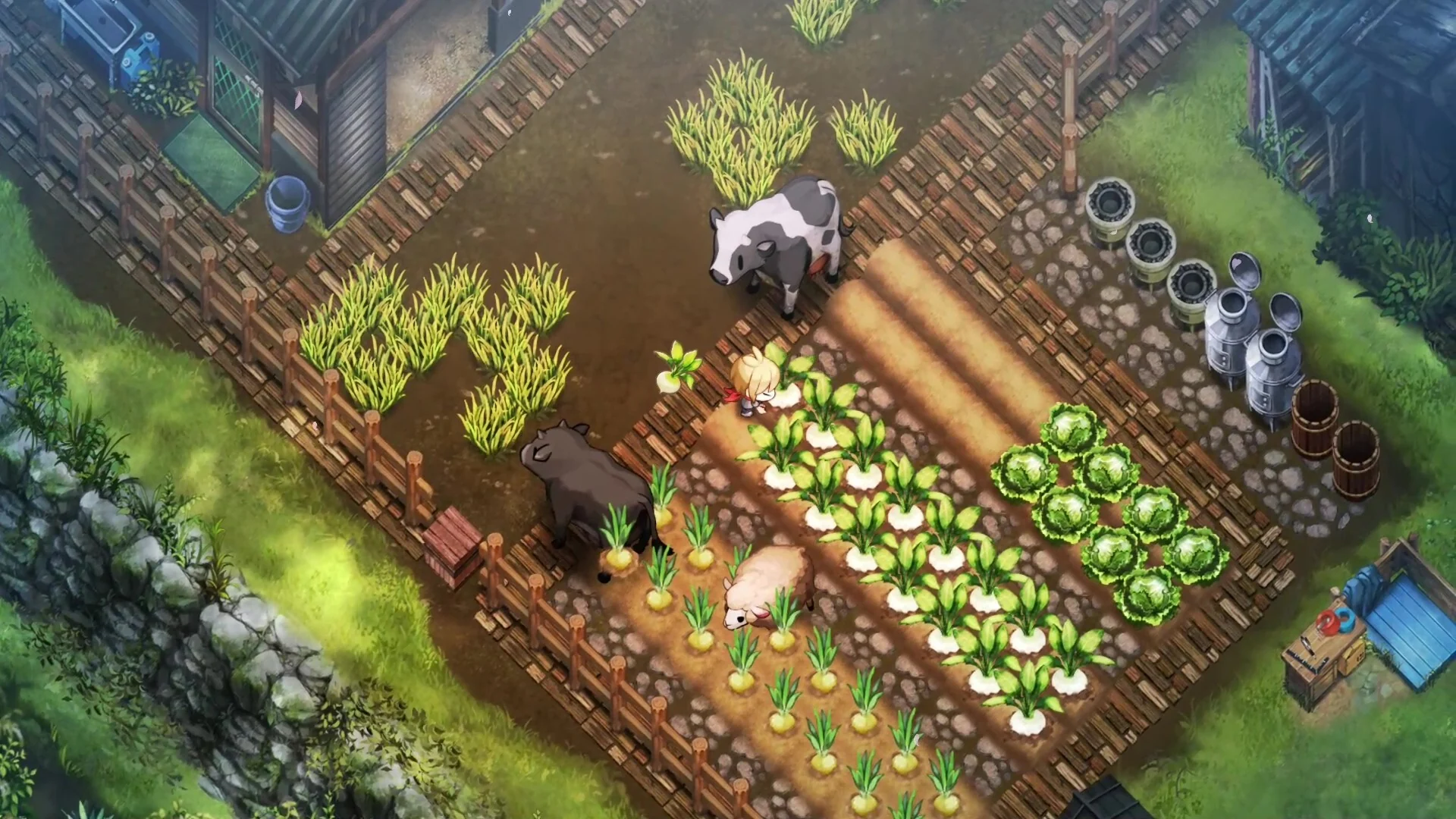
On a mechanical level, Village in the Shade handles its dual identity surprisingly well. The farming, crafting, and homestead customization elements are robust enough to stand on their own. You can build up structures like barns, arrange furniture to personalize your living space, and participate in seasonal Japanese-style festivals that temporarily lift the veil of dread hanging over the community.
- Pacing and Flow: The game features a notably deliberate opening. Expect to spend a solid chunk of your early hours navigating heavy tutorials and tight narrative railroading before the systemic freedom of your farm truly opens up. While this slower start builds deep atmospheric investment, players looking for immediate sandbox freedom may find their daily schedules heavily dictated by the plot early on.
- Traversal and Quality of Life: As your homestead grows and errands multiply, tools like the Dog Whistle become invaluable for fast-traveling around the sprawling mountain layout.
- The "Sunshine" Accessibility Mode: For players who are drawn to the art style and farming loop but want to avoid the horror elements entirely, the developers included a "Village in the Sunshine" mode. This mode removes the horror themes and prevents rule-breaking, offering a traditional, laid-back countryside simulation. However, diving into the raw horror experience is where the game truly shines.
Thematic Depth: Escapism and Social Critique
Beyond the crop rotations and crafting loops, Village in the Shade delivers a sharp social critique of modern escapism. It examines why people seek out isolated rural spaces to run away from urban stress, while simultaneously interrogating the dark cost of maintaining a veneer of polite society.
The characters you meet are deeply human, harboring bottled-up tensions and secrets that slowly unravel over an in-game year. The relationship mechanics differ slightly from conventional farming sims—notably lacking traditional romance options—instead focusing intensely on community survival, shared hardship, and the psychological weight of living under constant surveillance.
Presentation and Performance
Visually, the game is a triumph. Its gorgeous, hand-painted 2D art style creates an immersive storybook atmosphere that sharply contrasts with the grim undertones of the narrative. Audio design plays a vital role as well, using ambient silence, wind through the trees, and sudden shifts in tone to keep you perpetually on edge.
Performance-wise across modern platforms, the title runs smoothly, though players should note minor navigation quirks due to the skewed top-down 2D perspective during complex farming tasks. Additionally, saving is tied to sleeping at the end of each day, meaning you cannot freely save mid-task during long stretches of gameplay.
The Verdict
Village in the Shade successfully bridges two seemingly incompatible genres: the comforting, methodical loop of a farming simulator and the creeping dread of psychological horror. While its slow opening and strict mechanical pacing require patience, the payoff is a deeply atmospheric, memorable journey that lingers long after the final harvest.
If you are willing to look past the cozy marketing facade and embrace the darkness hidden in the mountains, Village in the Shade is an essential experience for fans of narrative-driven indie adventures.